Convertibles · Growth Portfolio
HRIS Buying Lifecycle
How small & medium business prospects buy HR software and how we can best position ourselves.
Study details
12 recent buyers.
- MethodModerated interviews with small & medium business non-customers who have recently purchased HR software.
- Sample5–80 employees · mostly switchers · founders, ops, finance & HR leads.
- SignalThis explores mental models and concept appeal, it is not proof that the trial converts.
- Band COnly one company 76–200 (n=1) — size claims are directional.
- PanelSkews AI-fluent — likely inflates “AI is the start.”
The so-what
The big ideas.
- 01Wanting a salesperson is about risk, not company size.
- 02Our job is to calm the fear — it hits first-timers hardest.
- 03Our trial is an early preview, but we present it like late proof.
- 04Buyers trust the concept that was transparent and honest.
Recreate the trust that a sales rep builds inside the product.
The buyer journey · the anxiety curve
The Trial · 01 — Mental model
Two meanings of “a trial.”
“Was it a trial that was empty and you put your own real data in? Or a sandbox with fake data?”— Jillian · 16 ppl
The Trial · 02 — How BambooHR differs
Different instruments, different questions.
Clearing the demo data cuts both ways. It’s a real limitation — nothing you set up carries into your paid account — but it’s also a deliberate choice, because BambooHR doesn’t want to hold real employee data for people who aren’t customers yet.
The Trial · 03 — Where we sit & what to do
Move it earlier — sell the preview, not the proof.
Its strength
Free, no-card, hands-on, no sales call — a natural fit early, at Discovery and Short list, where it calms the “am I picking the right one?” fear.
The mismatch
We sell it like the late, real-data pilot buyers expect at Evaluation — but their setup is cleared on convert, so it disappoints against that job.
- PositionSell it as a chance to see it and feel it, early — beside the demo and in marketing — and lean into what’s different: their own time, no sales call, no real data exposed.
- HandoffLet the demo or a rep own the later “prove it with my data” job — or build a way to drop a realistic scenario into the trial down the road.
- The userFor first-timers especially, it earns its keep by calming the “am I making the right choice?” fear before it grows.
Prototype · Guided welcome + AI agent
Guide them in.
The welcome flow asks what you came to do and tailors the path; the AI agent does a real task for you. Both tested the same idea — and the clearest signal was that buyers want to be guided, not dropped into the trial to explore on their own.
“It’s more inviting — with a goal in mind, versus ‘what am I looking for?’ In the other one I’m just clicking and I don’t know what I’m doing.”— Sandy · 80 ppl
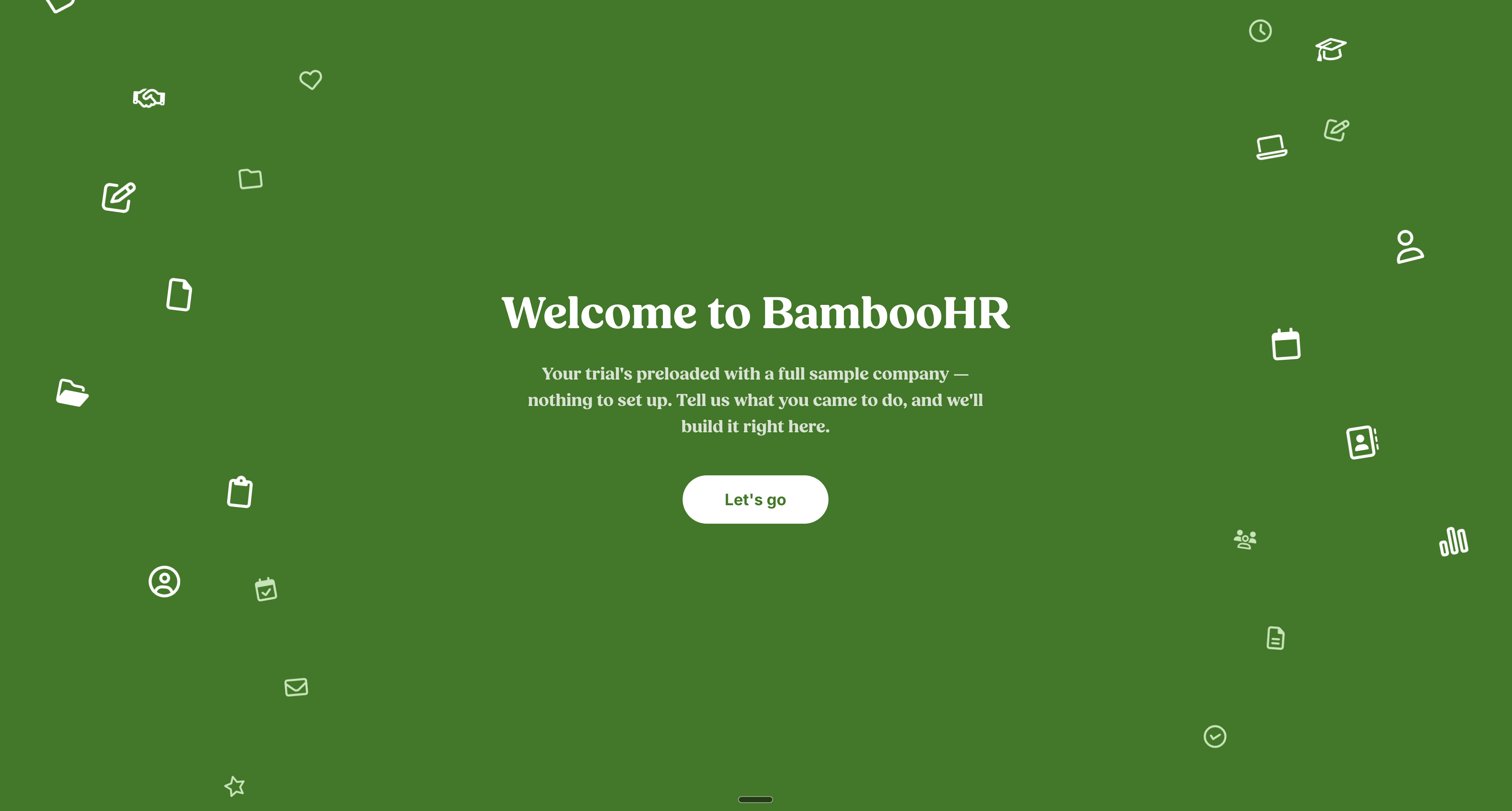
Welcome & Agent · Themes & implications
Themes
- Being guided beat being dropped in. The single strongest signal across both prototypes.
- The less sure the buyer, the more it helps. It reassures the anxious first-timer and just annoys the confident expert.
- The tailoring has to be real. Seeing your own industry built trust; a generic template read as “just marketing” and killed it.
- Attention goes to the artifact, not the chat — and trust is fragile: a glitchy agent or an empty payoff makes people doubt the whole product.
Design implications
- Lead with the guided framing, and make the destination feel like the real product — with any AI or chat beside it, not in place of it.
- Design for the anxious first-timer, and let confident users skip ahead in a single click.
- Make the tailoring genuine and editable, and prove the payoff right away so the “is this just marketing?” doubt never forms.
- Don’t ship the agent until it’s reliable, always give a clean path to a human, and let people pick more than one goal.
Prototype · RFP Evaluator
Transparency is the feature.
The clearest signal: this was the strongest-testing concept in the study — and it won over the AI-skeptics. It earns trust by showing what BambooHR can’t do.
“If it said ‘50 of 50’ you’d be like ‘whatever.’ But this honesty — you trust it more.”— Karen · 9 ppl
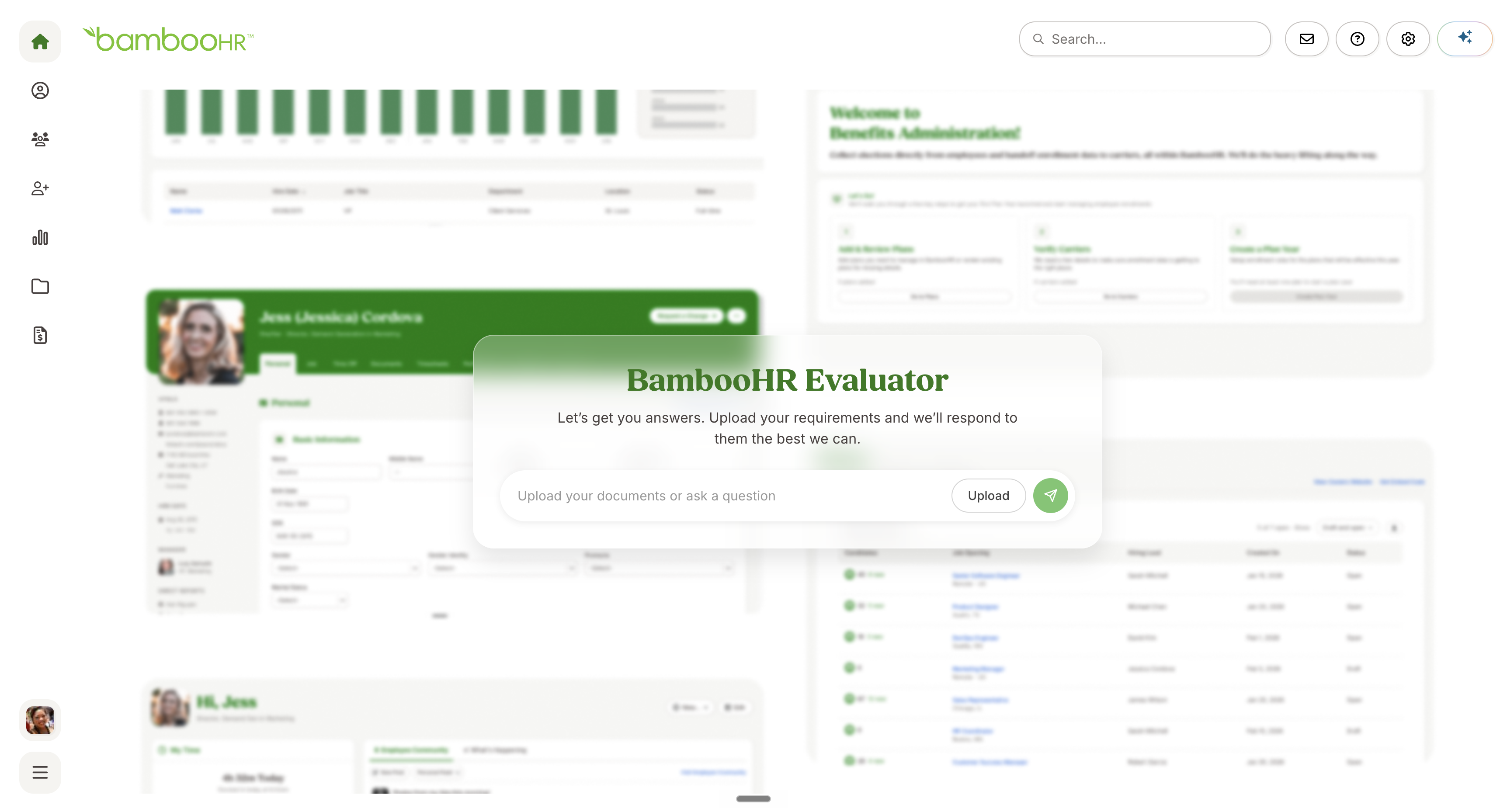
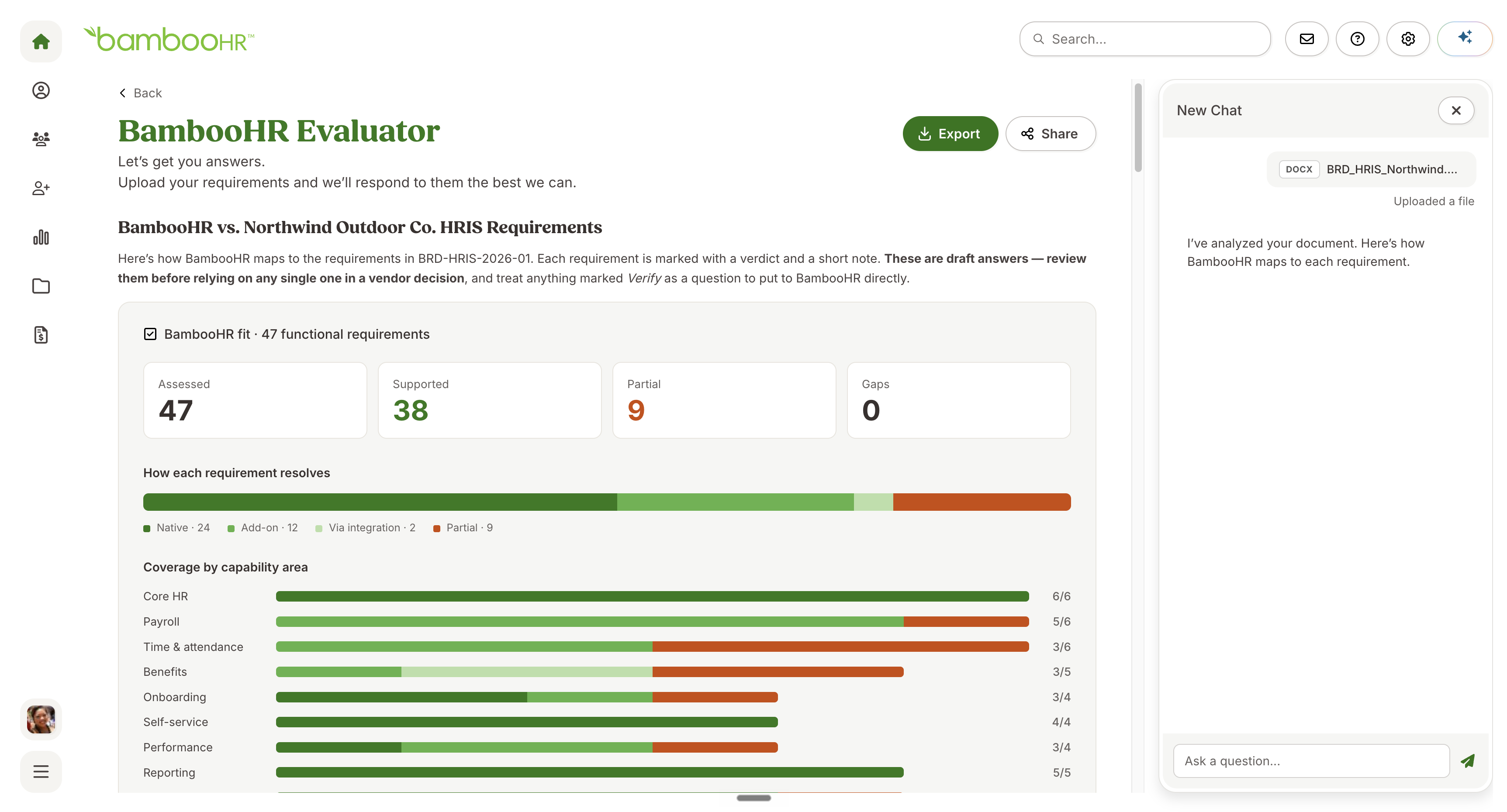
RFP Evaluator · Insights & Implications
Themes
- Transparency, not the hard sell, earns trust. Disclosing what BambooHR can’t do is the mechanism — it won over even the AI-skeptics.
- Finally, a fair comparison. Every vendor names features differently, so lining them up is genuinely hard — the evaluator does the matching, counters rep oversell, and surfaces hidden add-on cost early.
- It serves two users. The HR pro uploads a doc and gets an instant fit report; the novice has none, so it builds one — surfacing the questions they didn’t know to ask.
- It belongs earliest of all the pieces. A top-of-funnel filter — before or during the demo, even in marketing — and the upload itself signals a serious buyer.
Design implications
- Lead with honesty about what it can’t do. Owning the gaps is exactly what earns trust and wins the deal.
- Offer two paths. Let people upload a requirements doc, or answer a few guided questions that build the requirements for them.
- Put it early — in marketing or before the demo, as the tool that lets buyers compare options fairly.
- Confirm before scoring, and mind enterprise. Have the AI verify it understood the requirements before it scores — it falls apart if it maps terms wrong — and be careful showing gaps to large enterprise buyers, who could use them to rule you out.
Recap · The four big ideas
- 01Wanting a salesperson is about risk, not company size.
- 02Our job is to calm the fear — it hits first-timers hardest.
- 03Our trial is an early preview, but we present it like late proof.
- 04Buyers trust the concept that was transparent and honest.
What to do